Brighton Tram 53 Society

Welcome to the online digital home of Heritage Tramcar No. 53

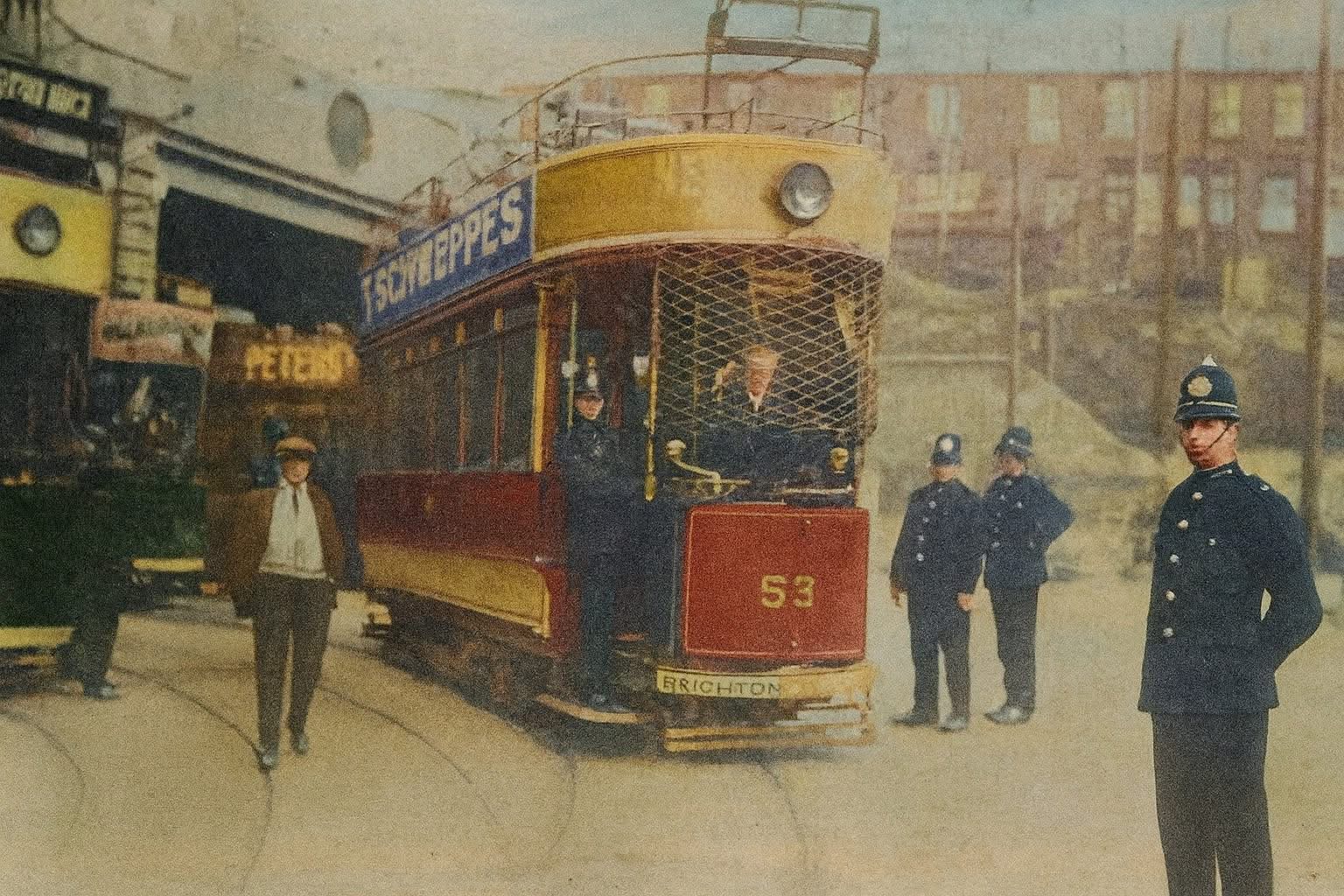
The last open-top tram ever built in Brighton, and the last of its kind constructed in the United Kingdom, was Tramcar 53. Built at the Brighton Corporation Tramways' Lewes Road Depot in 1936–1937, Tramcar 53 is a unique and irreplaceable part of Brighton's public transportation heritage.

This website shares the story of Brighton Corporation's historic tramway in public service from 1901 to 1939. We invite you to help get Tram 53 back home to Brighton by securing a permanent tram shed/workshop and a tramway in Stanmer Park. Through photographs and records, we aim to connect the community with this period of life-changing public transport and to preserve its legacy as part of the city's historic past.

Our vision is to bring Tramcar 53 home to Brighton, where it can be permanently based at Stanmer Park as a living piece of the city's history. We believe future generations should have the opportunity to see, experience and travel on an authentic Brighton-built heritage tram, preserving this extraordinary vehicle as an artefact of the city's rich transport and engineering heritage.

Please join us in helping ensure that Brighton's last surviving tram returns to the city where it once called home. Tramcar 53 belongs to the city and its residents; after 16 years and thousands of hours of enthusiasm, we are its current guardians with a dream to restore and preserve it.

Stanmer Park — a fitting home for Brighton's transport heritage

In 1947, Brighton Corporation acquired Stanmer Park for the leisure and enjoyment of the town and its residents. Today, Stanmer Park is recognised as a heritage family park, celebrating its history and landscape.

It would therefore be fitting for this historic setting to become home to a Heritage Brighton Corporation Tramway and a public transport museum featuring Brighton's only surviving heritage passenger tramcar, Tram 53.

Bringing Tram 53 back to Brighton, within the historic surroundings of Stanmer Park, would do more than preserve a historic tramcar. It would preserve an important chapter in the town's social, industrial, environmental and transport history, while giving future generations the opportunity to see, understand and experience how Brighton travelled in a bygone age.

Stanmer Park, proposed permanent home of Brighton Tram 53

What Brighton Corporation Tramways achieved between 1901-1939

Public transport, growth and civic pride

Mass public transport

It was the town’s first mass public transportation system designed specifically for the movement of the public to travel quicker and longer distances across the town at an affordable price, originally 1d (old penny) to travel anywhere on the town’s tramway. Trams went up hills; horse buses and horse cabs would not, thus offering the public a transport service over a larger area of Brighton. One very successful service offered was the journey from Brighton Railway Station to the Town's Racecourse; a record was set when one tram carried over 100 passengers to the racecourse. Trams replaced the need for the public to use the slower horse transport buses; now workers could travel further for their employment with shorter travelling times. The public became more mobile, moving in and around the town more easily and quickly. Resulting in a greater travelling public.
Population and commerce

The tramway created the opportunity for the town's population to grow even larger. It had already increased from 7,339 in 1801 to 123,478 in 1901. Trams created the opportunity for the additional building of homes further out from the town centre, which could be accessed by the tramway. This also attracted increased manufacturing and retail Businesses to open in the town. Retail business sales increased, as at most tram stops a tram arrived every 3-4 minutes, making it very convenient to pop downtown for retail therapy and easier to get your purchases home. Brighton Railway Station opened in 1841, bringing increased tourists to the town; from 1901, the new tramway helped manage that tourism growth around the town, boosting sales in the shops and attractions.

Cleaner, healthier streets

The tram network started the much-needed health improvement for the town’s residents. Up to 1000 horses a day used the streets as a toilet, soiling most roads and spreading diseases. Zoonotic illnesses such as Glanders, Tetanus, Typhoid, Cholera and Dysentery were all linked to the old horse transport environment. For more details, search “The Great Horse Manure Crisis of 1894”. Initially, Brighton streets produced so much manure and bodily fluid (on average, a horse produced up to a gallon of bodily fluid and 15 to 30 pounds of manure) that it was collected daily and delivered to farmers to be spread on their fields. But the sheer amount became so overwhelming that the excess manure was dumped on the beach at Black Rock to be washed out to sea. When a horse died in service, it was quite often left beside the road to decompose for a few days, making it easier to cut up when collected for disposal. Every Horse Omnibus used 12 horses a day, and donkeys were also used for street carts.

No subsidy needed

In its 38 years of operation, the tramway produced yearly profits, with money going back into the town’s coffers as it NEVER needed a financial subsidy. Over 38 years, the total profit was £54k (equivalent in 2026 to £4.4 million), partly generated by the trams being covered in advertising from local and international businesses, including Coca-Cola, Schweppes, Persil, and Kellogg's, but mainly generated by a total of 629,000,000 fare-paying passengers (1901 - 1939). In the first twelve months of operation (1901 - 1902), the trams carried 10,432,508 passengers, producing a revenue of £43,700 (2026 - £7,265,366.08p). However, the level of financial investment required to expand the track network further out of town was just one of the main factors that contributed to its demise in 1939, as the cost proved to be prohibitive. A cheaper alternative presented itself in the form of the "Trolley Bus". With no need to install additional expensive track rails. The Trolley Bus had another advantage, a fully enclosed top deck keeping passengers dry and warm.

Membership Enquiries

Join the society and be part of Brighton's transport heritage or Donations welcome.

Get in Touch

Need to ask a question? drop us an email, all enquiries welcome.

Follow Us

For all the latest News check out our Facebook page, updated weekly or view our latest videos, watch on TikTok.

We need help and support from all Businesses in and around Brighton and Hove to get Tram 53 moved and relocated to Stanmer Park.With your help and support, we can show the city council that companies in the city back our proposal for the tram to have a permanent home in Stanmer Park. Please can we add your Company name to our Public Register to show we have your support. To get in touch, please email allan@tram53.uk

We very much need the backing and support of residents of the city of Brighton and Hove and surrounding areas.The Society have an online petition running, gathering public support. If you have not already added your name, please would you consider doing so. It’s FREE to add your support. Whilst there, you may be asked to make a donation to help cover the petition costs, but this is at your discretion and not a requirement for adding your name to the petition.Sign on Change.org
Additionally, you can support the Tram by contacting your local councillor. Click here to find your councillor, copy their email address and send them a short email stating your support for Tram 53 and Stanmer Park becoming its permanent Brighton home.

History of Brighton Corporation Tramways

1901 – 1939

1864

Proposal to Brighton Corporation to set up a Horse drawn Tramway but rejected because of public opposition.

1883

Discussions held about creating an Electric Tramway for the town.

1897

November

The Longhurst Brewery site at Preston Circus (now Brighton Fire Station) was purchased for laying of track, a new Tram HQ and Depot but after demolishing the building an underground stream deemed it not suitable ground for a building or tram sheds because of the weight of the trams.

1898

Brighton Corporation apply for a Parliamentary Bill to use the town’s roads to construct and establish a public passenger tramway. A Commisioner was appointed by Brighton Corporation to oversee the setup of Brighton Corporation Tramways and the installation of the street tramway. A horse omnibus was used to plan the 8 Trial routes. Initially London Road was left of the routes due to heavy horse vehicle usage and crowded pavements. But because of a second opinion as to why it should be left out was sort, it won the day and it was included in the routes.

1899

April 21st

The new Commisioner and committee visit Boulogne, Rouen, Paris and Brussels to research the trams used and how they ran their Tramways. On return to Brighton they decided additionally to visit Tramways in: Dover, Leeds, Blackpool, Sheffield and Halifax. The findings from the research tours decided how the town would operate a day to day use of Electric Trams, supplied by overhead cables for power and what would be the best design of tram for the narrow steets of the town. Brighton Corporation Tramways was formerly commissioned offering a Public transport network.

1900

A Brighton Corporation Act was made into law to install and operate a corporation run Tramway. Purchase of land, formally a traveller’s site to build the Lewes Road Head office / 6 track Tram Sheds + 1 track paint shed / Workshop-Garage / Exterior Yard, 30 Tramcars (Numbers 1 - 30) purchased.

1901

May - November

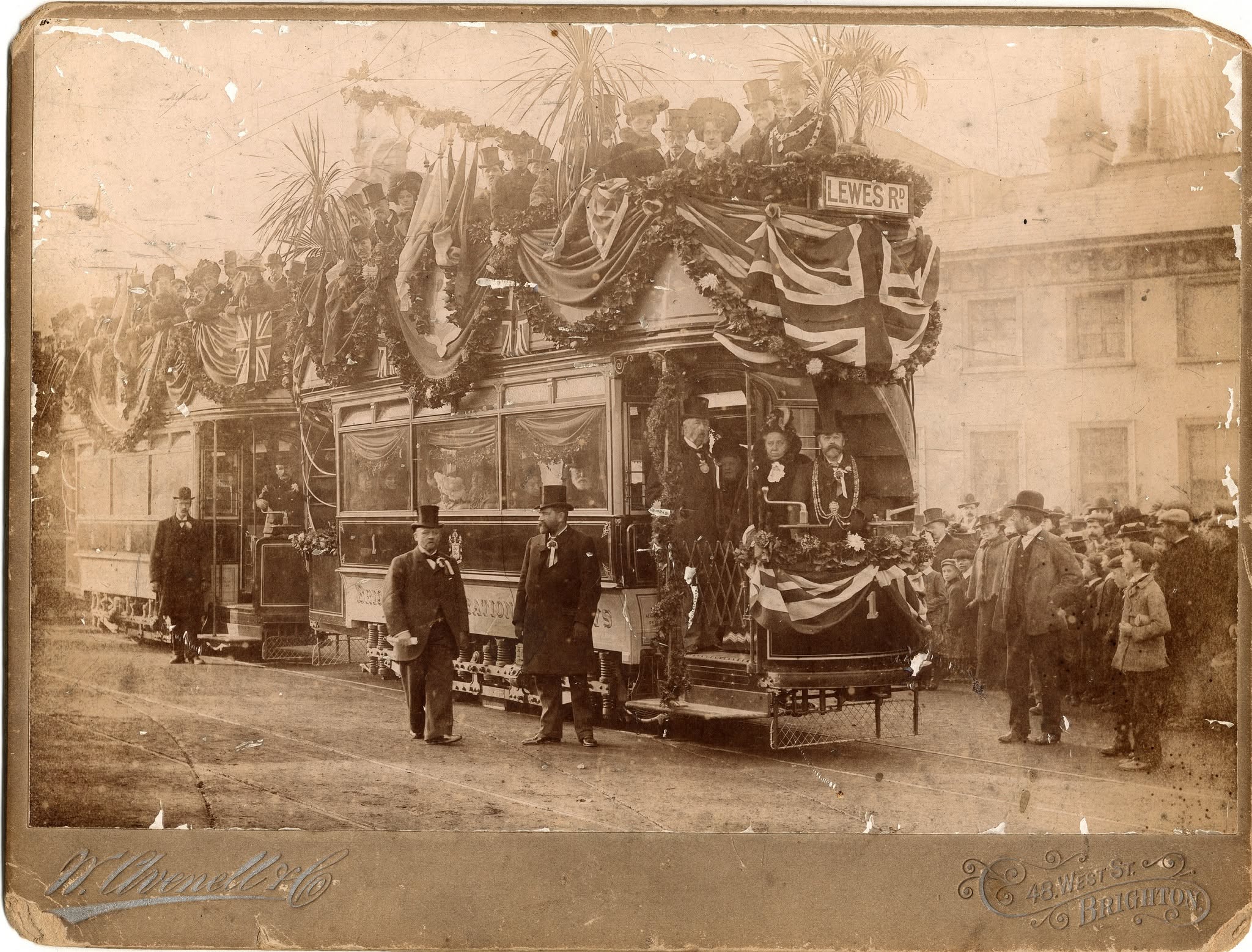
The Lewes Road building was started and finished by November, using 300,000 bricks and labour from Corporation employees. The first Tram route (Route L) was completed in November travelling from the original start terminus being the southern end of Victoria Gardens travelling to Preston Barracks (Lewes Road). On November 25th, the Tramway was offically opened with the first tramcar driven ceremonially by John Stafford, the then Brighton Mayor to Lewes road army barracks. The same day, the public service started at 1.15pm running 20 trams; by the end of the day on the Route L, ticket price 1d (one penny), the trams had carried 19,074 individual passenger journeys with total ticket sales of £79 9s 6d (2026 £79,475.00p

mayor and tram
mayor and 1st tram

1904

July

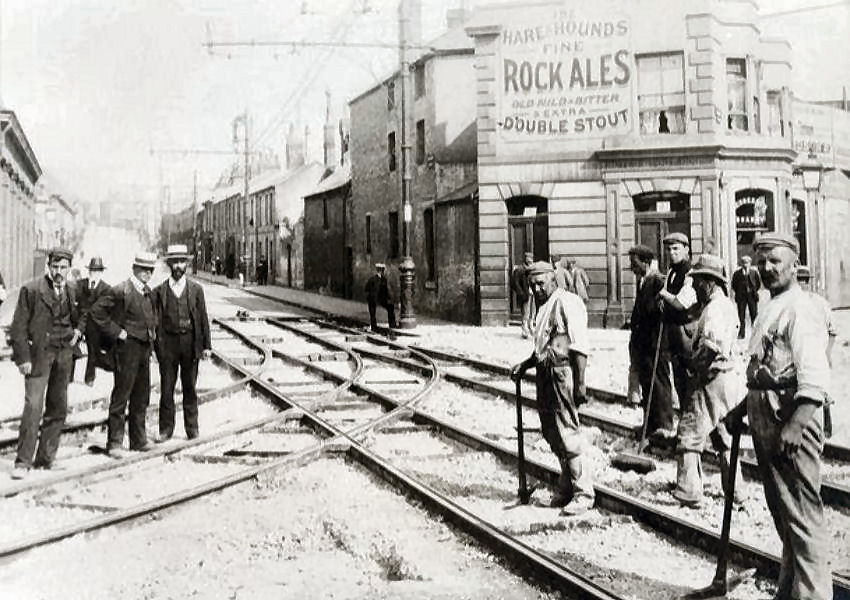
Completion of the full tramway network, including laying track at the Old Steine for the new permanent terminus called the Aquarium extending Route L, now being a total track coverage of 9.5 miles, using 9 routes with a “next tram arriving waiting time” at the majority of tram stops of just 4 - 5 minutes. Start of minor refurbishing of all trams as deemed necessary because the quality of workmanship and features on the trams purchased was deemed poor.

track laying
track laying

1905

Brighton Corporation Tramways have 232 staff – 74 Motormen, 68 Conductors.

1906

13th June

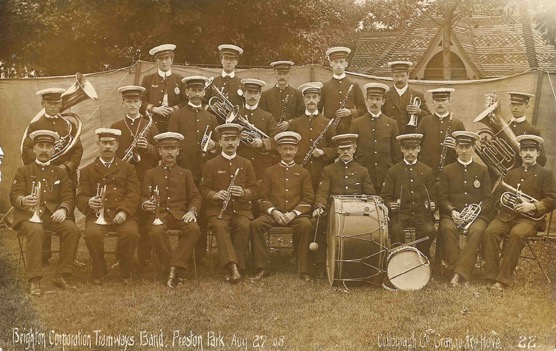
Brighton Corporation Tramways Brass Band formed consisting of 12 members eventually rising to over 20 members being of both Motormen and Conductors. The band would play during summer months in Preston Park, civic events and community gatherings.

Corporation Brass Band

1908

Having now purchased a total of 80 trams from Milnes Co, which built the bodies and used Westinghouse trucks, the Corporation started a major rebuild/refurbish of the purchased trams, included was the saloon frames, using quality seasoned Oak wood to replace the unseasoned American timber. It was then decided that all future new trams would be built in-house at Lewes Road Depot because it was not being offered a quality-built tram.

1909

13th June

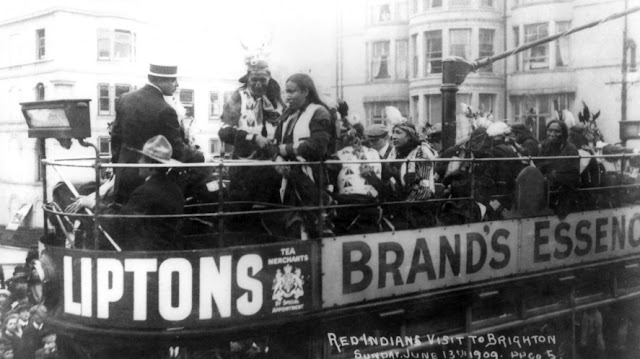
In 1909 a group of Native American Indians visit Brighton and enjoy sight seeing on the top deck of a tram

Native American Indians visit Brighton 1909

1910-1919

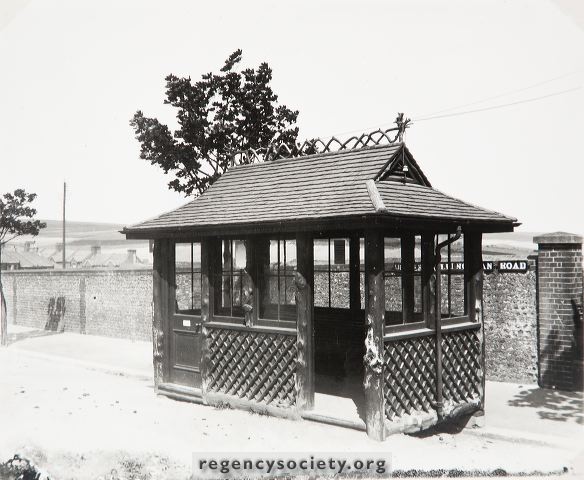
Street Wooden Passenger shelters were built at the ends of each tram route with a few built mid routes

tramcar shelter
Brighton tram passenger shelter, Ditchling Road

1913

A parcel service was added, for example returning a book back to the library. A demonstration of the efficency of this new municipal run public transportation operation was shown in 1913 when 40 trams queued at the top of Elm Grove to convey 2,000 passengers away from the Race Course which was completed in under 20 minutes.

1914

The First World War

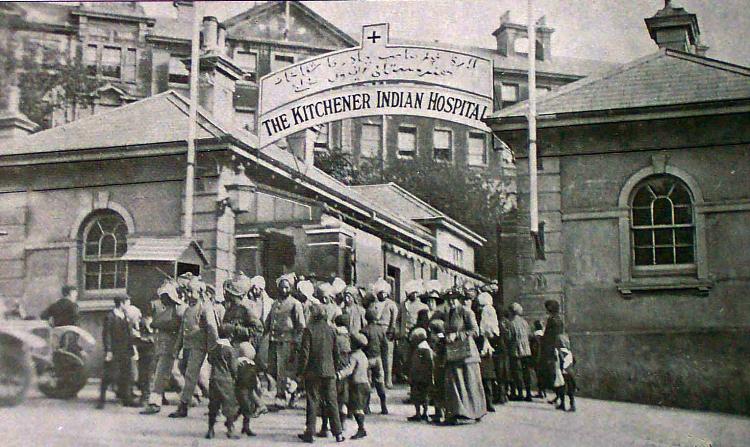
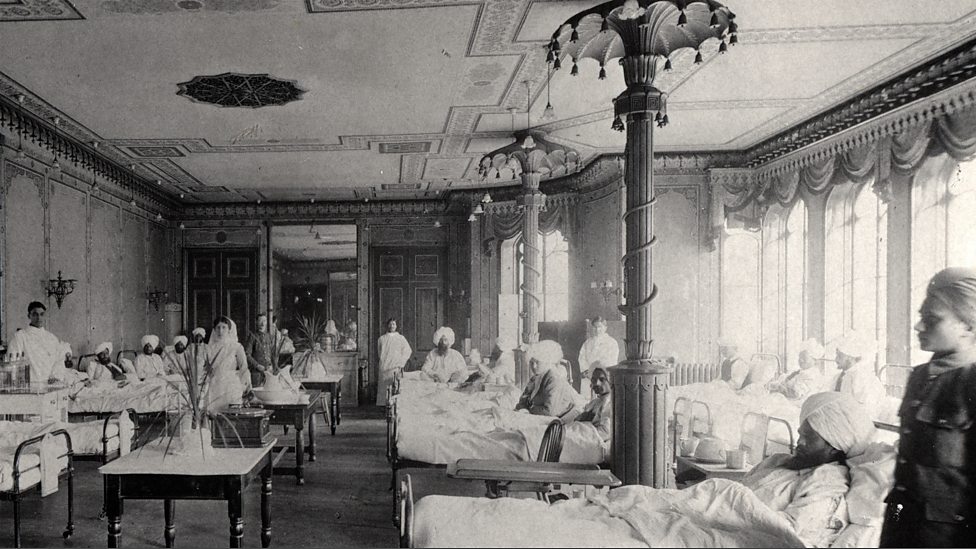
Having acquired the skilled work force necessary by 1914, the Corporation decided to implement its decision of 1908 to stop purchasing trams and started to build in house trams using their own superior designs which improved year on year, offering passengers increased comfort and a smoother ride. The Corporation built a total of 116 trams but had no choice in that all trams had to have an open top deck due to regulations of the 1900 Corporation Act. By the time of WW1 breaking out in 1914, Brighton Corporation Tramways had 273 employees. The War Mobilisation Order meant 114 were conscripted. As a result, all remaining employees worked 7 days a week for 11 hours a day. During 1914 Indian and British Soldiers injured were reurning from France and were sent to Brighton's newly setup superior medical facilities for treatment. They were sent by train from Dover/Southampton, and on arriving at Brighton, the military ambulances found they could not cope. The decision was made to use Trams to assist the transportation of the patients to the Royal Pavilion Hospital Estate (included the Corn Exchange & Dome) and the Lord Kitchener Hospital (the Workhouse – later Brighton General Hospital - Elm Grove). Around the Royal Pavillion Estate a high fence was erected for the indian soldiers dignity, the public used the trams travelling on the top deck to get a view.

Lord Kitchener Hospital
First World War hospital ward in Brighton
Hospital ward during the First World War

1915

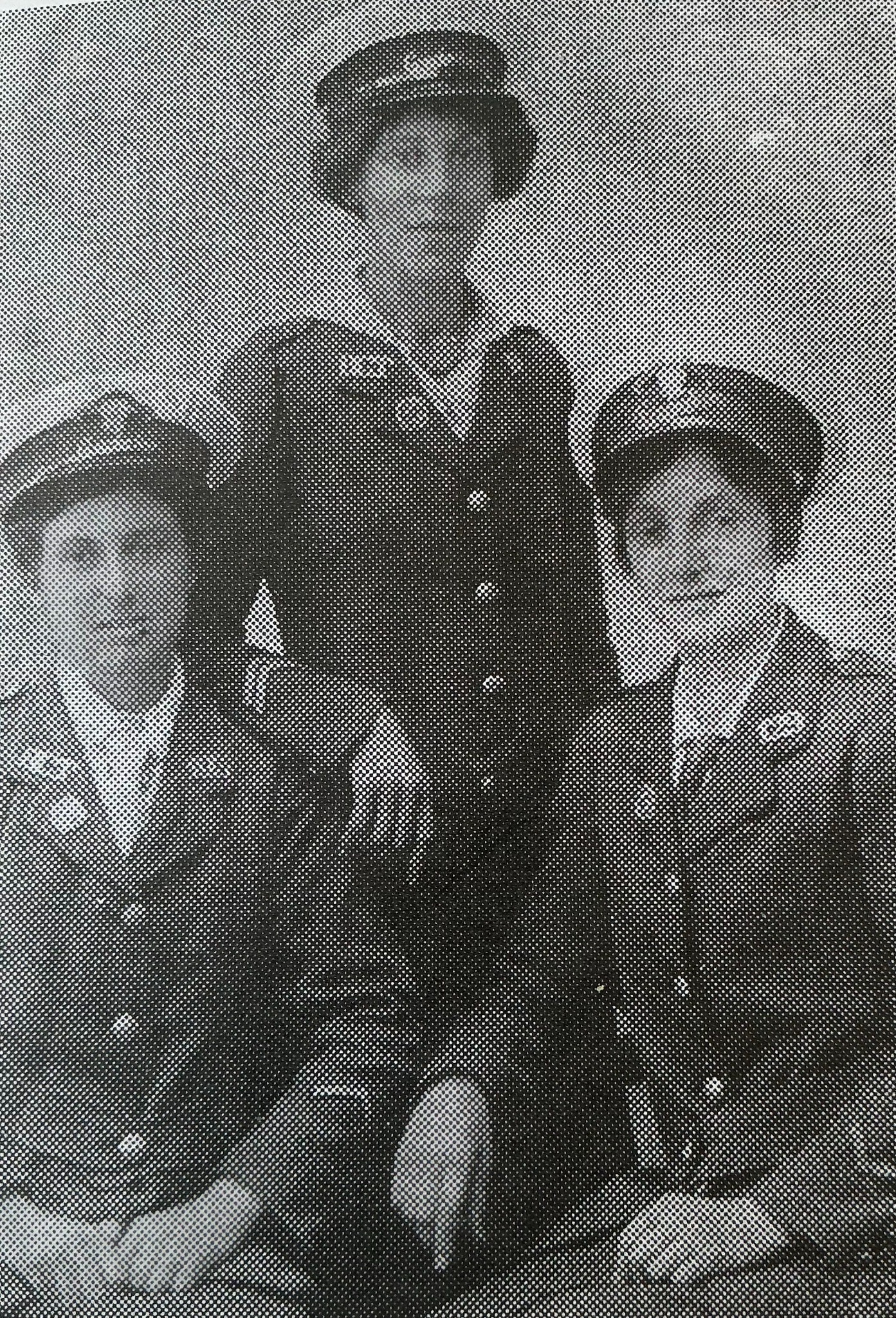
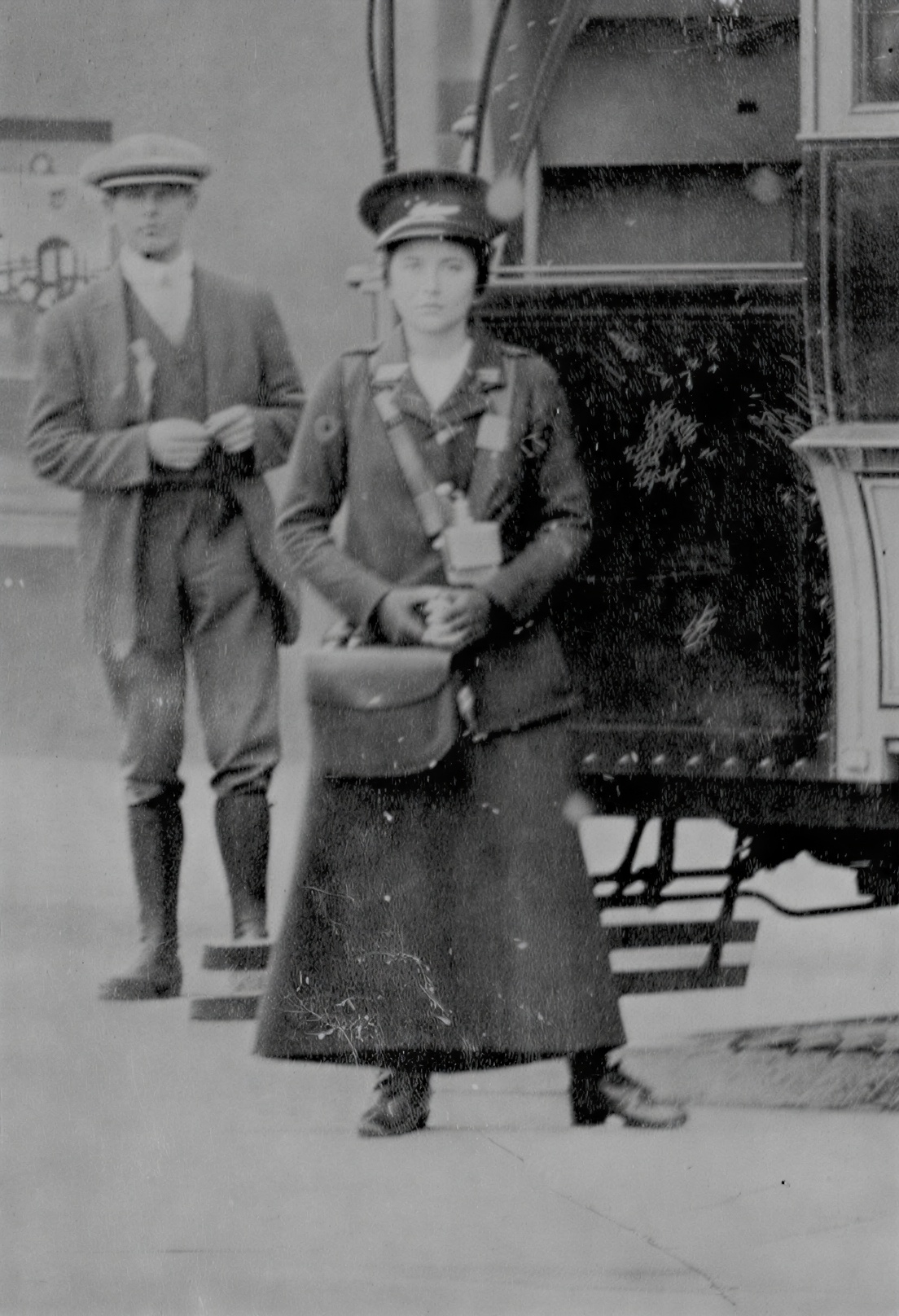
To replace those conscripted for the war effort, it was decided to include 6 female employees as conductresses, and they proved more reliable than the new male employees. Brighton was the first town in the UK to employ conductresses.

Brighton Corporation Tramways conductresses
Brighton tram conductress beside a tram
Brighton tram conductress

1916

March

The total conductresses employed was now 48 being 73% of all the conducting staff. Another 82 men left the tramway, conscipted for the war effort

1919

May

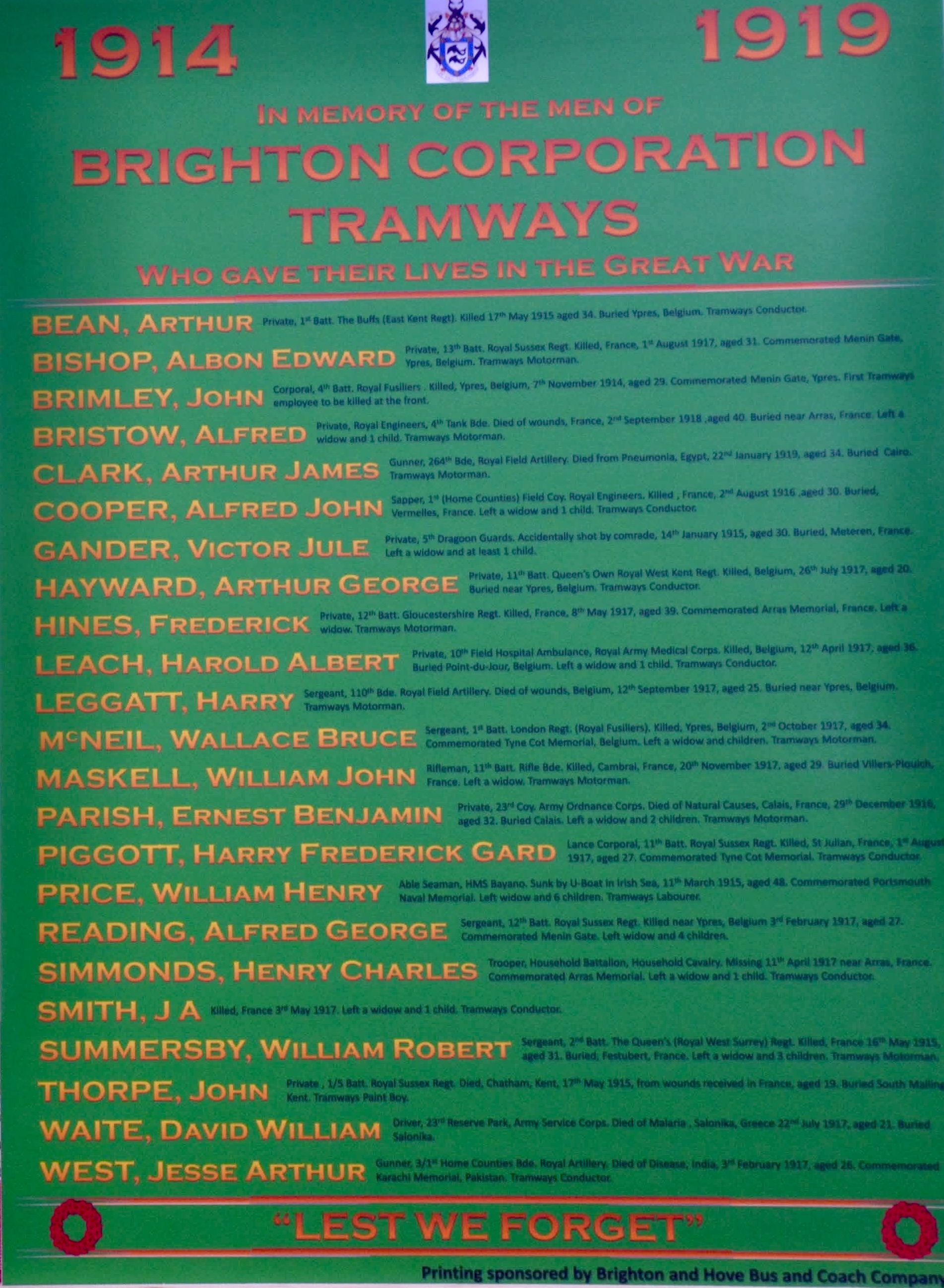
Most conductress’s have now been replaced by returning male soldiers. A memorial board was put up at Lewes Road HQ/Depot to remember and honour the 24 employees killed in action who did not return.

Brighton Corporation Tramways First World War memorial board
Memorial board honouring employees killed in the First World War

1920

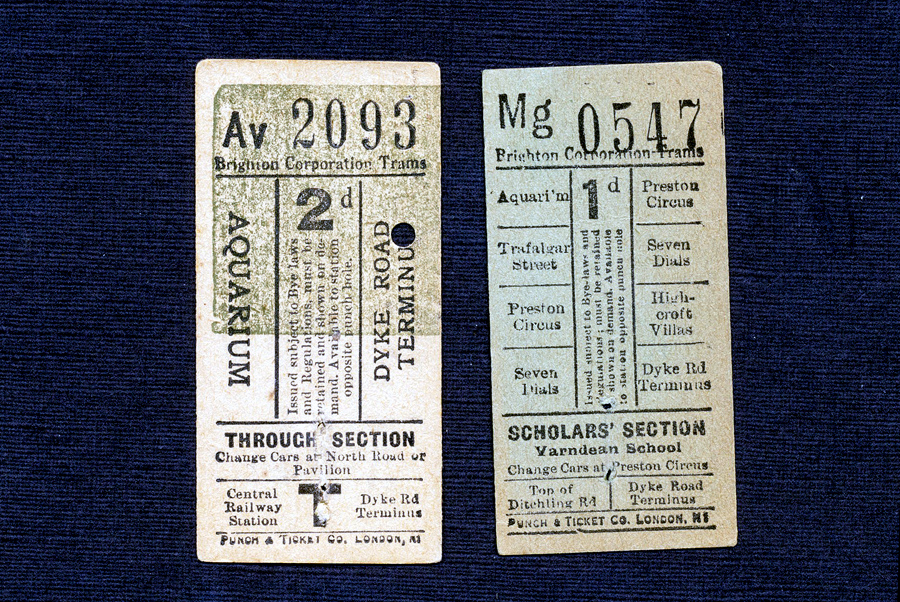
The minimum 1d (penny) fare was abolished increasing to 2d (pence).

tram tickets
Tram Tickets

1923

Having now rebuilt all the tramway track with better quality rails, the tram maximum speed was increased from 15 mph to a max of 20 mph.

1926

The General Strike Tuesday 11th May

The General Strike of 1926 had a massive effect on the Brighton Tramway. The strike called by the TUC over striking coal miners paralysed the UK, and in Brighton the strike was complete, with everything closed down, including the Tramway. On 11th May, 4,000 strikers from around the town thought there was an attempt to start the trams working when management tried to smuggle in workers for training. As a result, a battle outside the depot gates occurred, now recognised as ‘The Battle of Lewes Road’. 22 arrests were made, and many were injured. The General Strike started on 4th May and finished on 12th May..

The Battle of Lewes Road during the 1926 General Strike
The Battle of Lewes Road, 1926

1927

The tram network now has all the superior trams built at the Lewes Road Corporation workshop running on the tramway, as all purchased trams have now been scrapped.

1936/37

Trams 51, 52 & 53 were built by General manager/engineer William Marsh without specific authorisation from the Corporation. They were the very last open top trams built at the Brighton Workshop and the whole of the UK. The new 53 was the third tram to use this number.

1939

September

In 1939, the Tramway network was scrapped, having carried a total of 629 million passengers over 52 million miles of passenger journeys, making a profit every year from 1905. The total profit over 38 years of operation was £54k (equivalent in 2026 to £4.6 million), paid back into Corporation coffers to help cover the cost of running the town. The tramway network never needed any subsidy and had a near-perfect safety record of only one major accident. Sadly, no one realised the environmentally friendly, non-polluting, energy-efficient, smooth-riding tram and tramway was/should have been the future of public transport.

2009-2010

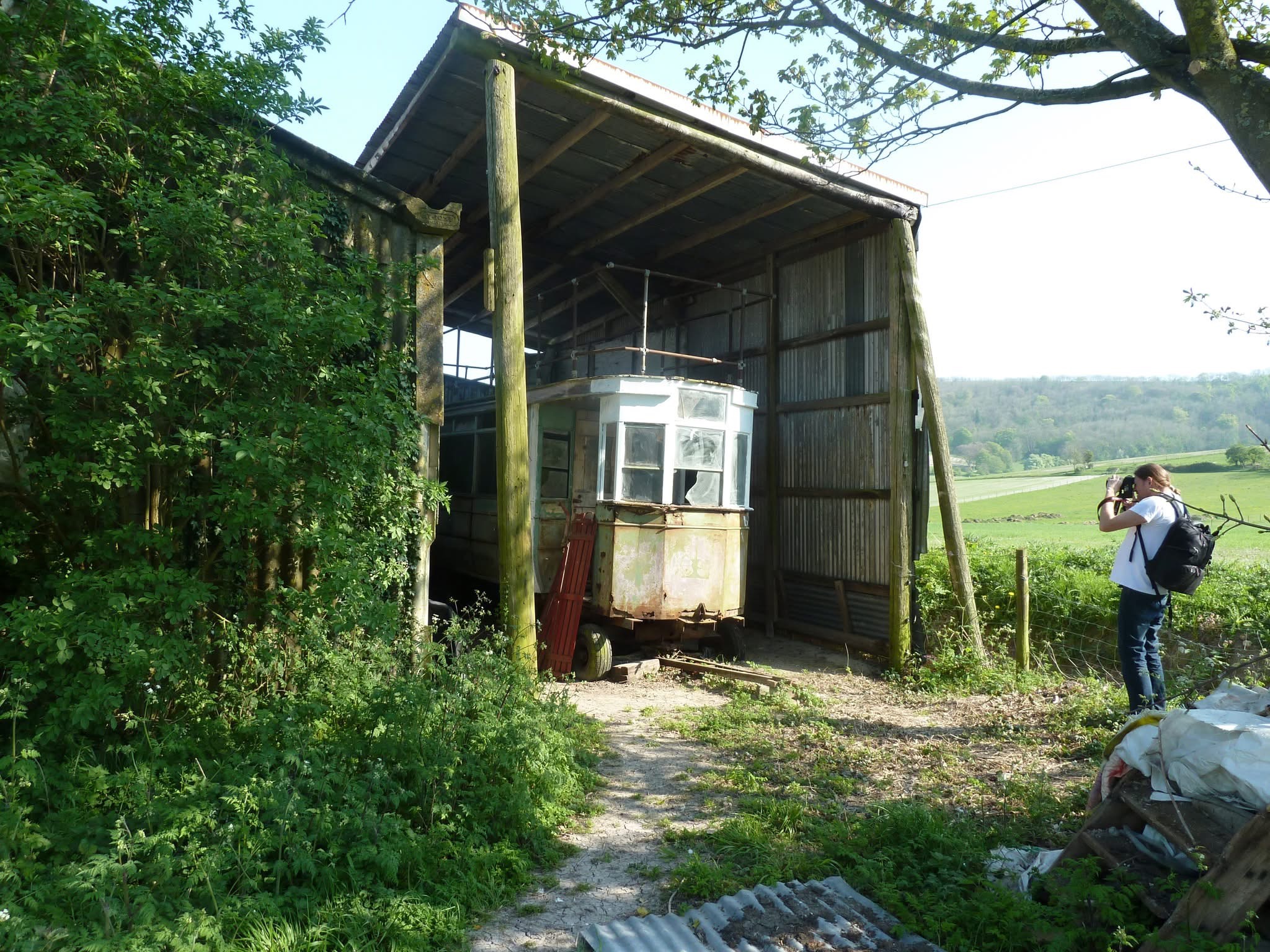
December 2009 Guy Hall a model maker, hears a story that there is a forgotten Brighton tram on a farm in West Sussex. After searching and finding the farm, discussions with the farmer took place for this, the only survivor of the 38 years of Brighton’s Tramway. It was agreed he would start a full restoration program making it a fully working Heritage tram. A 16 year restoration period (2010-2026) for the former Brighton Corporation Tramway tramcar 53 starts. March 2010, at the "Hope" public house Brighton, the first ever meeting with 13 people in attendance, the "Brighton Tram 53 Society" is formed.

Brighton Tram 53 before restoration
Tram 53 before restoration

2026

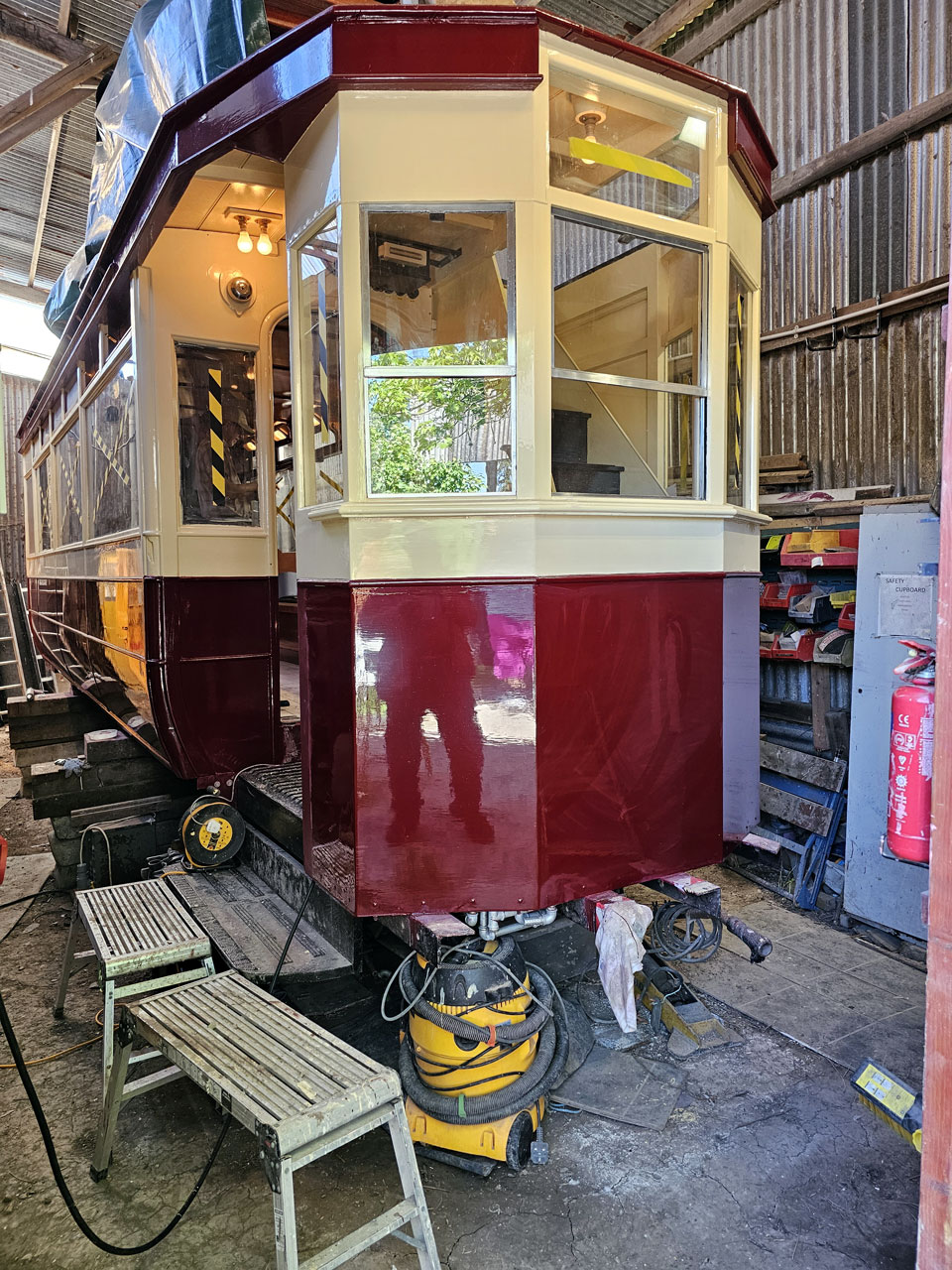
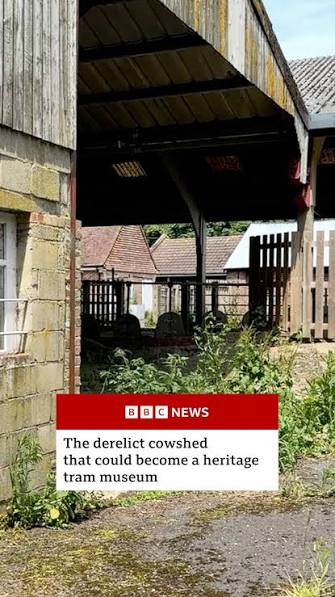
With restoration nearly complete, the Society formally asks Brighton & Hove City Council officers and Councillors to be given the use of two barns and courtyard at Home Farm, Stanmer Park. The business plan is to convert the two buildings to be the permanent home of Tram 53, being tram sheds and a museum. Followed by laying a permanent Tramway travelling down to the park entrance gate and back up stopping at Stanmer House, One Garden-a destination garden and terminating at the park’s Historic Barn in Stanmer Village.

Current Brighton Tram 53 restoration progress
Current Tram 53 restoration progress
BBC news preview about the Stanmer Park Tram 53 proposal BBC South TodayStanmer Park / Tram 53 news report — click to watch

Description of a Brighton Corporation Tram

Design, interior and operation

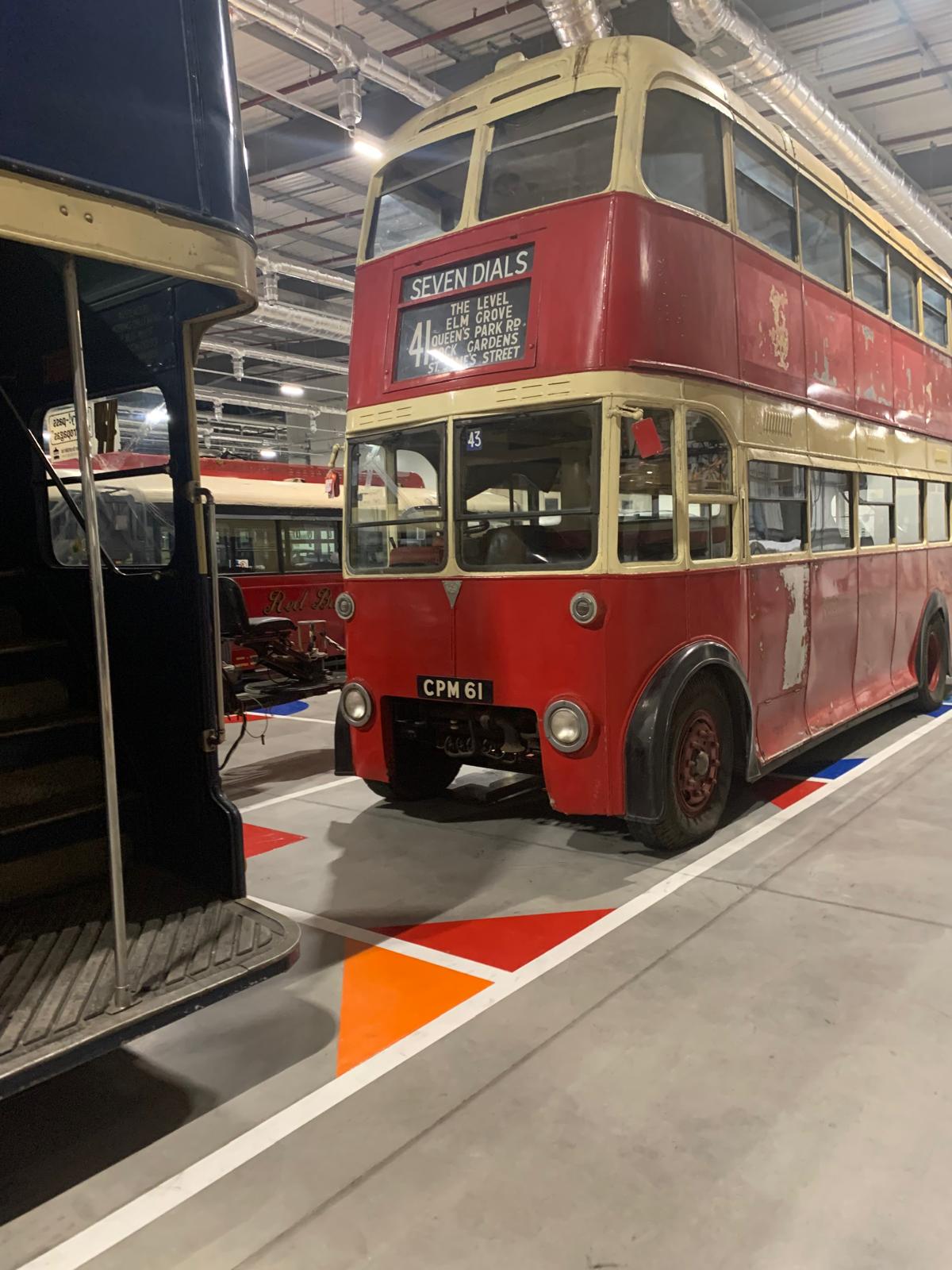
Brighton trams were all open top. Our tram 53 was the last open top tram built in Brighton and in the UK. All Brighton trams were a two deck public passenger vehicle designed to transport people efficiently around the town. The first trams (purchased) used a typical early simple tram design using American hard wood timber for the saloon, later trams built in Brighton, used a higher specfication design and using Oak wood for the saloon. The tram concept was considered very modern as it was electric, non-polluting and energy efficient, due to running on metal rails (three feet six inches track width), with a better use of energy. This gave it green credentials, which were not thought about back in the 1900s. The tram offered a smooth quiet ride at a maximum speed of initially 12mph, then 15 mph and finally 20 mph.

Exterior & Build

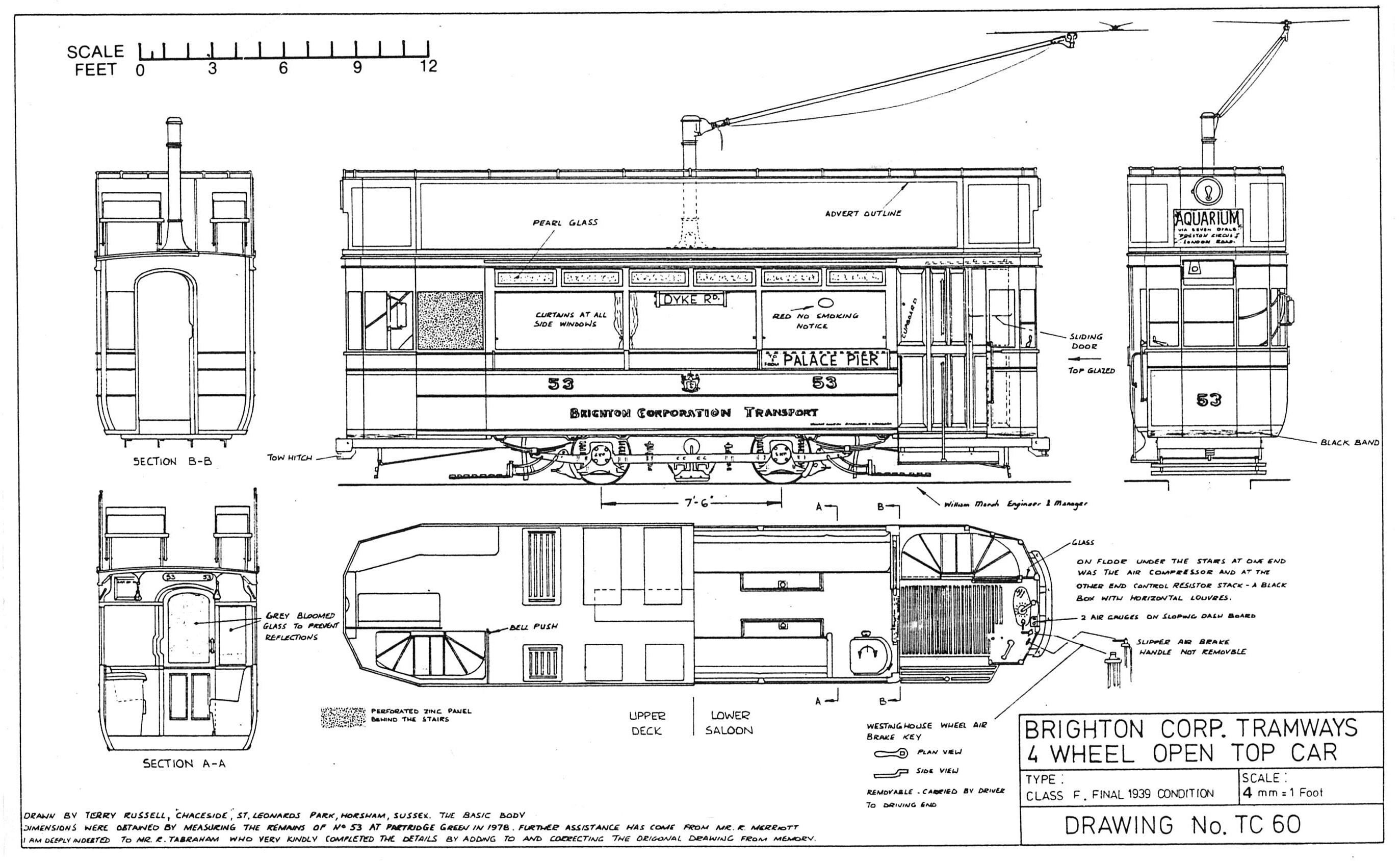
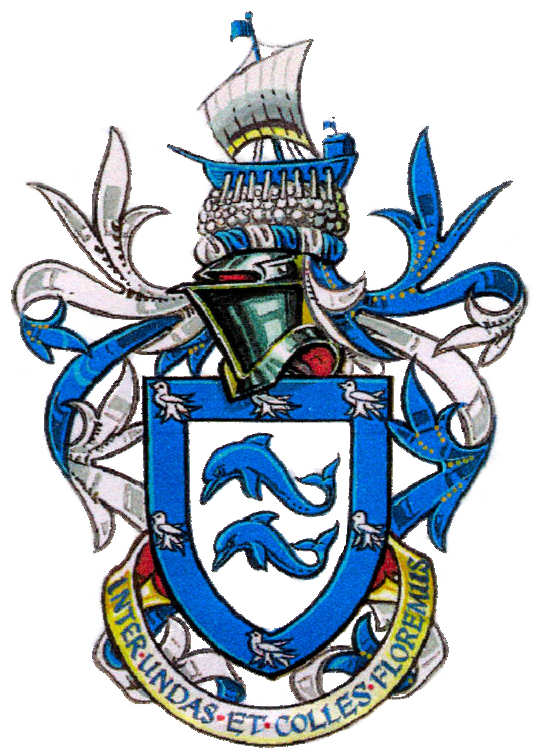
A narrow vehicle body, constructed using a hard wood coach style-built frame sitting on a metal chassis, covered with plywood or steel panels, with wooden framed glass windows. The outside was hand painted in two tone colours with an elaborate pin lining, all in bold enamel paints in the Corporations livery. Large transfers of the Towns Coat of Arms on each side were added. The tram featured a fully enclosed lower saloon and an open top deck. The Tram length was 30 feet long, 6 feet wide and 12 feet high. The outside had advertising/destination hand painted boards sitting in clips on the side of the tram, which could be changed daily. The saloon eventually had advertising in various locations and later trams were fully covered in advertising including the stair case risers.

Interior

Inside early trams, passengers sat initially on stained / varnished slatted wooden single and double chairs with a reversible back rests plus an additonial small bench seat. Due to the time it took to empty the saloon of its passengers, later trams replaced the rows of seats with two upholstered benches running down the saloon length wise. All exposed wood was also stained and heavily varnished to get that glass finish, including the sliding saloon doors at each end. There were hand supports hanging down from the birds eye maple finish ceiling with interior lighting above the top 45 degree opening, stained/varnished wooden windows. There were also brass Bell Push Buttons on both sides. Spiral staircases at each end of the tram gave access to the top deck.

Upper Deck

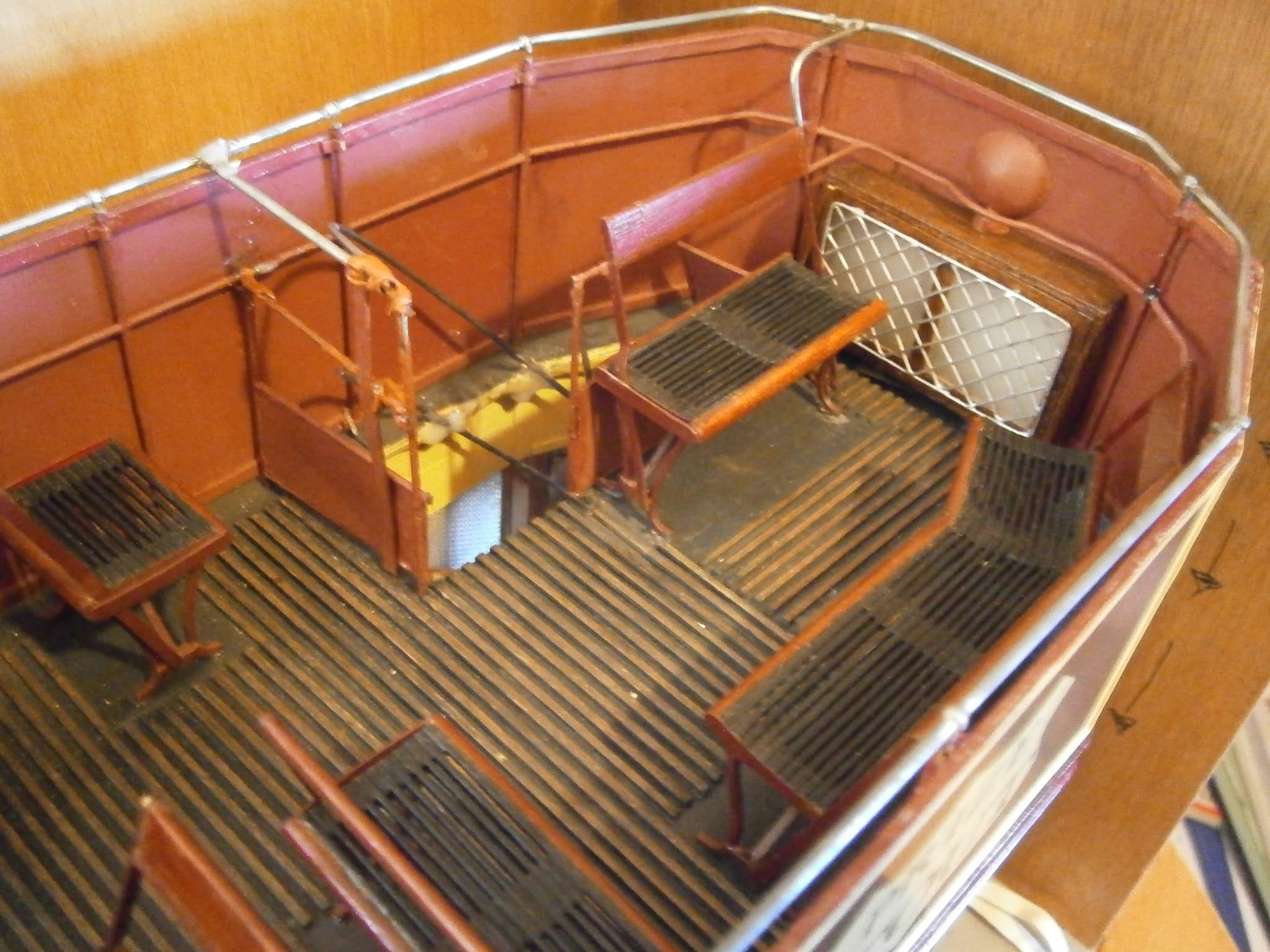
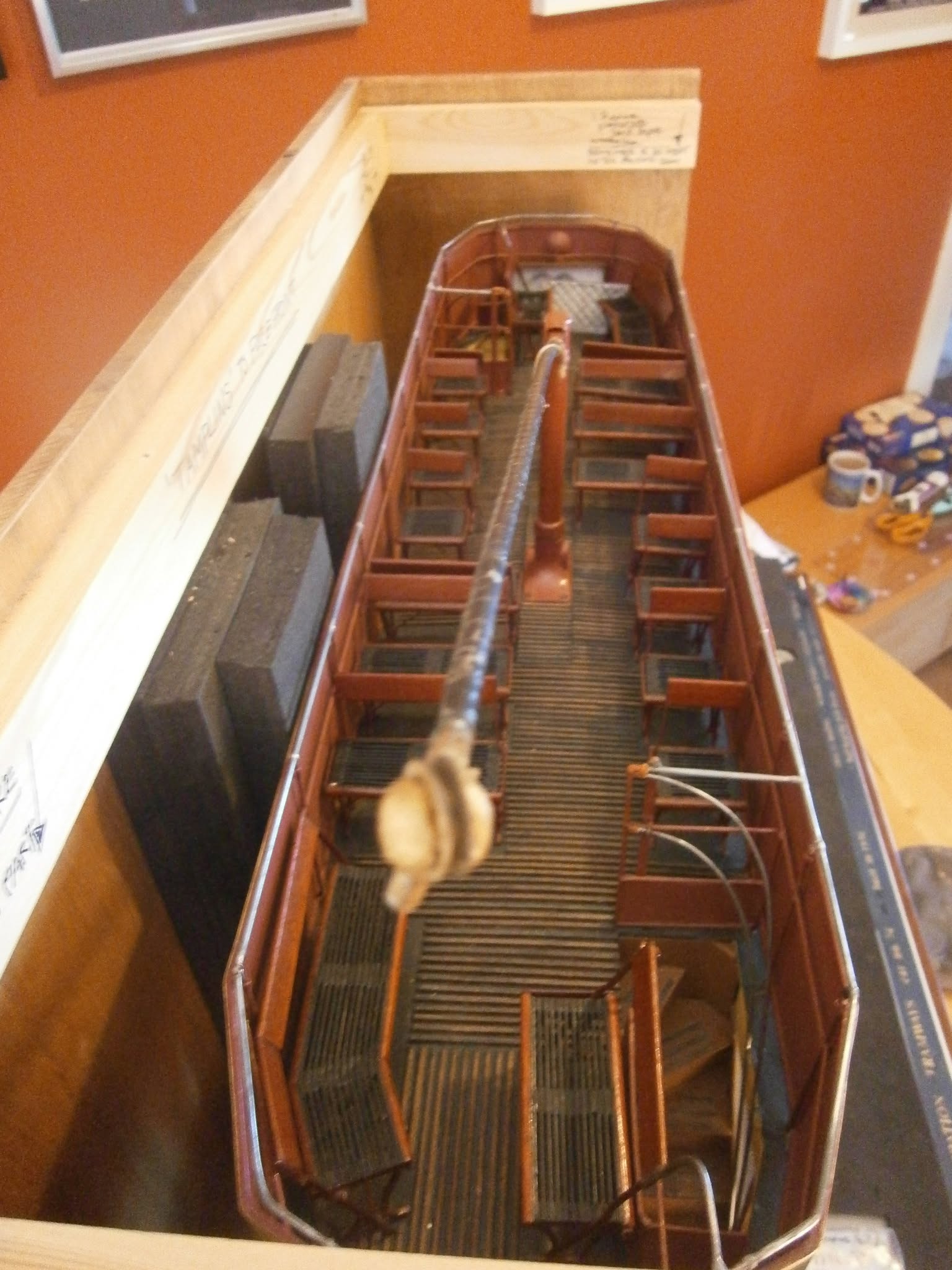
A steep, wooden, metal lined narrow staircase at each end of the deck was used to access the top deck. The top deck comprised of single and double heavily varnished and stained slatted wooden bench seating with reversible back rests in various positions fitted around the Boom pole base. All of the upper deck was open to the natural elements. The upper deck had side decency panels (early trams only had a tube protection rail around the edge of the top deck), these metal panels, fitted to the tube protection rail, covered the seated passengers legs increasing in height with later trams eventually rising to shoulder height.

Mechanics & Power

Propulsion was powered by two electric traction motors mounted in the underside truck (also housing the suspension, brakes, two axles and four wheels). These motors were initially 35hp motors, increasing in size with the later trams using a 50hp motors. Power was provided by the overhead copper wire, accessed by a touching Boom pole which collected the positive current from one of the wires, drawing 500 DC volts of electricity, with the second wire acting as the negative return.

Crew

Each tram had a crew of two, consisting of a Motorman (a driver) and a conductor. From 1914, as the country went to war with Germany, staff were called up to join the services with some of the conductors being replaced by conductresses. After the war in 1919/1920 all conductresses were replaced with the ex-soldiers returning home.

Motormen / Operations / Controls

To operated the tram the Motormen (Drivers) had two hand levers, one for moving forward and one for braking with a third being a track brake operated by a circular wheel when the tram was stationary. At the end of the route the Motormen simply walked through the tram to the opposite end to operate the tram as it had driving platforms at both ends with no need for the tramway to accommodate turning the tram around. Later trams used an uprated Westinghouse air brakes system with a compressor had been added to the tram.

The Conductor/Conductoress

Giving the Motormen the signal (bell) permission to Start and Stop the tram movement. Controlled the passengers over the two decks, collecting fares, issuing and clipping tickets.

Passenger Capacity

The capacity of the tram could comfortably transport 40 to 52 seated passengers, which was double the capacity of a horse omnibus. There were no standing restrictions on the tram on either deck and a record was set with a tram carrying over a 100 passengers up Elm Grove to Brighton Racecourse.

Technical drawing of a Brighton tram

History of UK Trams & Tramways

Key early tramway milestones

1801

21st May

First UK Horse Tramway opened by Surrey Iron Railway to be used for carrying freight.

1807

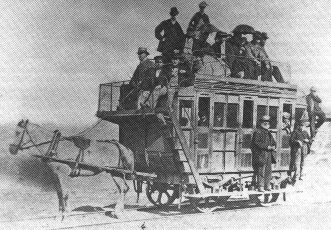
The first in the world operating, fare paying Passenger Horse Tram running between Swansea & Mumbles, Wales — Oystermouth Railway.

Historic passenger horse tram
Early passenger horse tram

1860

30th September

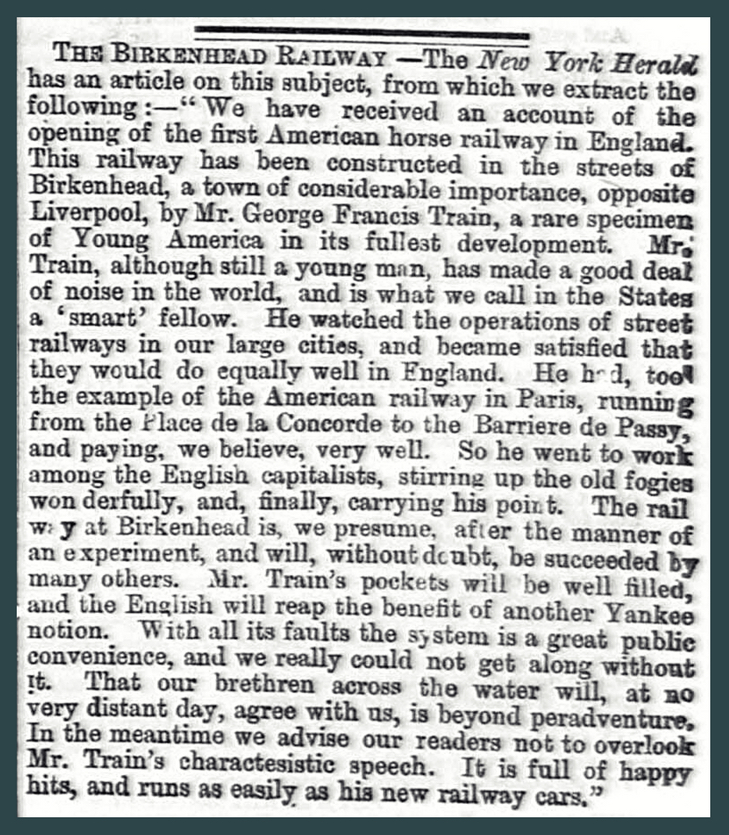
The first UK street Passenger Horse Tramway, a distance of 1 1/2 miles, set up by an American Mr George Francis Train — The Birkenhead Railway, Birkenhead.

The Birkenhead Railway newspaper article

1861

The First London Horse Tram introduced.

1870

The First Tramways Act put in place by Parliament to provide protection for local authorities from Tramway proposals.

1883

The First UK ELECTRIC Tramway, Volks Electrical Railway, opens in Brighton.

Origins of the word TRAM

Early meaning and development

The word tram originated around 1500 in Scotland to describe a wooden beam, shaft of a cart, or wheeled trucks used in coal mines.

The term tram likely derives from Flemish trame, meaning beam, handle of a barrow, or bar.

The word tramway is thought to date from about 1826.